

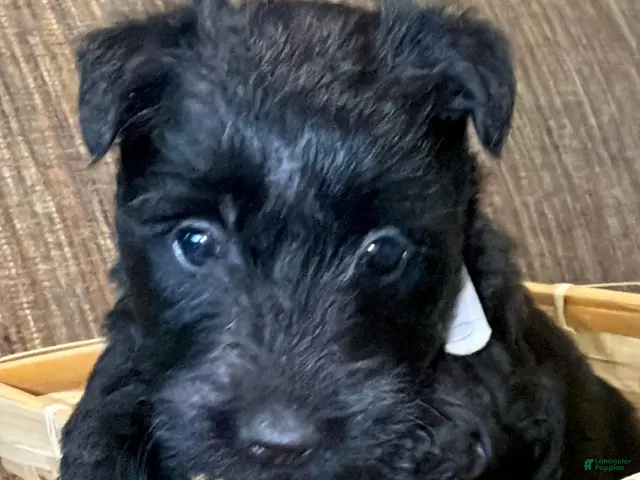
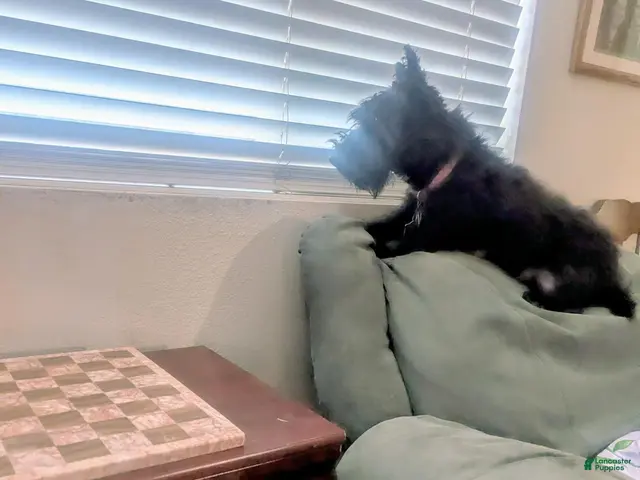
The Scottish Terrier, affectionately known as the Scottie or Aberdeenie, is a small but bold breed known for its intelligence, independence, and loyalty. Despite their serious expression and dignified stance, Scotties are deeply affectionate with their families and love being part of household activities. Their compact size and self-sufficient nature make them excellent companions for apartment living, provided they still get a short daily walk and plenty of mental stimulation.
Originating in Scotland, the Scottish Terrier’s exact lineage is somewhat mysterious. For centuries, all terriers from Scotland were grouped under the general term “Scottish” or “Scotch” Terriers. It wasn’t until the late 1800s that the breed developed its own identity, with a formal standard established around 1880. The first Scottie arrived in the United States in 1883, and just a year later, the American Kennel Club (AKC) officially recognized the breed. Known for their distinct double coat — a soft undercoat covered by a long, wiry outer coat — Scotties are most often black, though grey, brindle, or wheaten varieties also exist. Standing just 10 inches tall, they carry themselves with a proud, confident posture that reflects their spirited nature.
Scottish Terriers are loyal, intelligent, and determined. They form strong bonds with their families and are excellent watchdogs, though they usually bark only with purpose. Naturally independent and sometimes stubborn, Scotties respond best to positive, consistent training that balances firmness with affection. While generally healthy, they can be prone to conditions like Scottie cramp, Von Willebrand's disease, and patellar luxation. Their coat requires regular hand-stripping to preserve its texture, or clipping for easier maintenance at the expense of losing the breed’s signature look. Scotties shed moderately, and frequent brushing helps control loose hair. Energetic and curious, they thrive on daily walks and interactive play. Learn more about the Scottish Terrier.
Scottish Terrier
Rosie is the littlest of the females, but oh so ruggard. She was the first of the litter to navigate over the stile that leads from the Whelping Pen to the Play Pen. She was also the first to try re

Scottish Terrier
Liberty or Libby is always aware of what's going on and at times rushes to join the group. Yet at other times, she doesn't care what's happening. She is an individual who doesn't necessarily need gr

Scottish Terrier
Pearl is a happy puppy, - not one to initiate or get into fights, but is happy being by herself or playing with others. Bottom LIne - She is a soft ball of fur to cherish and love. She soaks it up.
Scottish Terrier
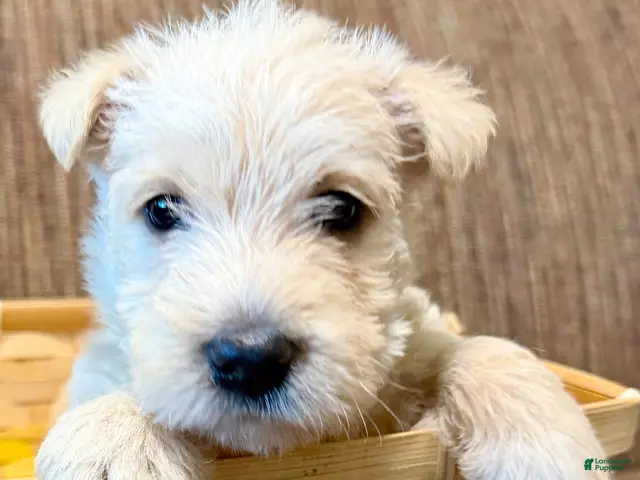
Nessie got his name from the Loch Ness Monster because he was and is the largest pup. He is a beautiful Wheaten, becoming more white and uniform as he matures. He loves to play and use his newly acq
Scottish Terrier
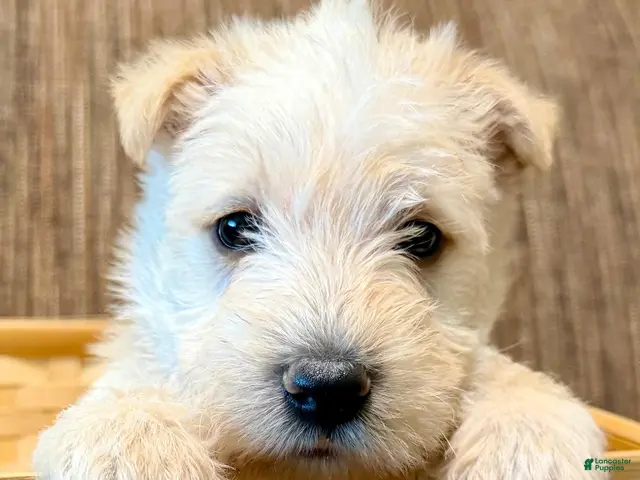
Pretty Boy received his name because of his beautiful varied markings from a darker tan to light tan to white. He is the second largest pup. He is a back sleeper and thus a "tummy-rubber" as is his