

Black white Newfoundland Puppies for sale
Also known as the Newfie or Newfoundland Dog, the Newfoundland is a massive, gentle, and loyal working breed famous for its strength and remarkable swimming ability. With their webbed paws, muscular build, and water-resistant double coat, Newfoundlands excel at water rescue and remain one of the most beloved family companions for those who appreciate their calm and affectionate temperament.
The Newfoundland originated on the Canadian island that shares its name, where it worked alongside fishermen to haul nets, rescue drowning sailors, and retrieve gear from the sea. While the breed’s exact origins remain uncertain, it likely developed in the 15th and 16th centuries from crosses between European dogs such as the Great Pyrenees, Portuguese Water Dog, and various Mastiff-type breeds. Despite facing near extinction in the 1700s due to taxation laws, Newfoundlands regained popularity in the 1800s and were officially recognized by the American Kennel Club (AKC) in 1879. These large, powerful dogs are known for their thick, double-layered coats, which are usually black, brown, or gray, and their expressive eyes that reflect their gentle nature.
Newfoundlands are affectionate, patient, and protective—often described as “gentle giants.” They are wonderful with children and other pets, making them ideal family dogs. Despite their size, they are calm indoors but thrive when given plenty of outdoor space and opportunities to swim. Because they form deep emotional bonds with their families, they dislike being left alone for long periods. Regular grooming is essential to manage their dense coat and heavy shedding, especially during seasonal changes. Health concerns for this breed include hip and elbow dysplasia, heart conditions, and kidney issues, which can limit their lifespan to around 9–10 years. Still, with proper care, these loyal and loving dogs bring immense joy to their households. Whether on land or in water, the Newfoundland embodies strength, devotion, and a heart as big as its frame.


LadyBug
Newfoundland
The last born girl, number eight overall, red collar. She is a sweet puppy, who wants to please. She loves to play and often is still going after her other siblings have gone for a nap. Highly intelligent, precious girl.


Monarch
Newfoundland
The first born and biggest (so far) female, she's named after the Monarch Butterfly. She's playful but kind of independent, too. As befitting the name Monarch, she kind of has a royal "air" about her. She would do well in any type of home, we think. She's happy to play, but if you're resting, she'll be down for that, too.


FireFly
Newfoundland
He's the first born boy (3rd overall). He's an energetic Newfie and if you sit down in the puppy pile, he'll shove his way through until he gets to your lap. He's always ready to play and loves to roughhouse with his litter mates. Loves laps... Repeating, loves laps :-))


BumbleBee
Newfoundland
Last born, NOT a runt. He's the second biggest puppy in size, probably the biggest one in personality. He is always there. He is ready. There? Ready? What do you mean? Doesn't matter. Whatever it is, he's fully-present and "in the moment". You can't do a "thing", any "thing", without BumbleBee. He lives large.


Moth
Newfoundland
Moth, fifth born, fourth girl, all bad ass. Full of energy, she's kind of the leader of the puppies. She corrects their behavior if it doesn't suit her. She's not mean or anything; she's just a leader. She loves being petted and handled but will take some time for herself when she wants it. She doesn't always have to be the center of attention but, beware, she's alway


Roly Poly
Newfoundland
Number three of the five boys, seventh overall, he's a big, happy boy. He just LOOKS like he's going to be a big boy. Everything about him is big, especially his personality. Incredibly outgoing, playful, always up for a wrestle or a tug, he's a high-energy, delightful Newfie.


Skeeter
Newfoundland
Skeeter (2nd boy, 6 overall), light blue collar. Boy, is he a handful. He's a mix of sweetness and wild man rolled into one. He loves to play. He loves to run. He loves to test boundaries then lie in your lap. He's a character. So much fun.

Mavin
Newfoundland
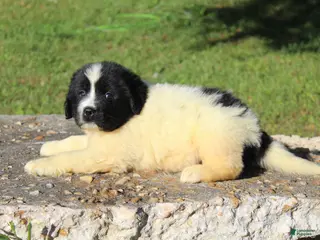
Mavin is a social gal who loves attention. She wants to be center of attention. She is the most people driven and wants to be with people. She has a beautiful coat with less black and lots of white. S


Rosalina
Newfoundland
Rosalina is a black and white landseer.


Boo
Newfoundland
Boo is a black and white Landseer.


Mario
Newfoundland
Mario is a black and white Landseer.
 25
25Bae
Newfoundland
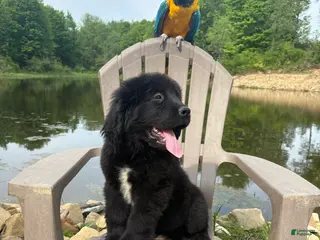
Bae is such a cute Newfoundland she is all black with a slight sliver of white in the middle of her chest! Shes for sure to be a head turner and she looks just like like her mom ❤️ she will be 8 weeks
 7
7Newfoundland Puppy 4
Newfoundland
This gorgeous girl is black with white on all four feet, her chin and chest and a small bit of white at the very tip of her tail. Newfies are known for their calm disposition.

Green collar - on hold
Newfoundland
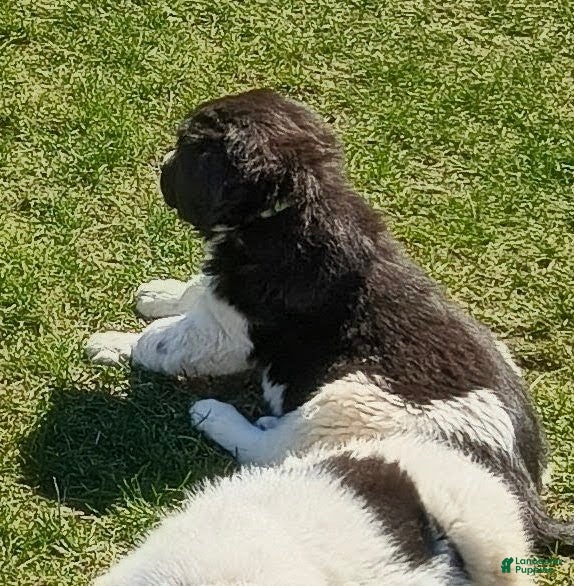
6/1 - This cutie has been on her own for a week now and she is adjusting fabulously. No whining when she is alone until she needs to go out. She is learning basic manners like walking on a leash, sit

Purple collar (formally Yellow collar)
Newfoundland
5/27 got his booster shot today he did very well. Weighed in at 16lbs. Black coat with white stripe on his chest. He likes to snuggle and gets into the wrestling match with his siblings. He is getting


Luigi
Newfoundland
Luigi is a black and white Landseer.
FAQs
